
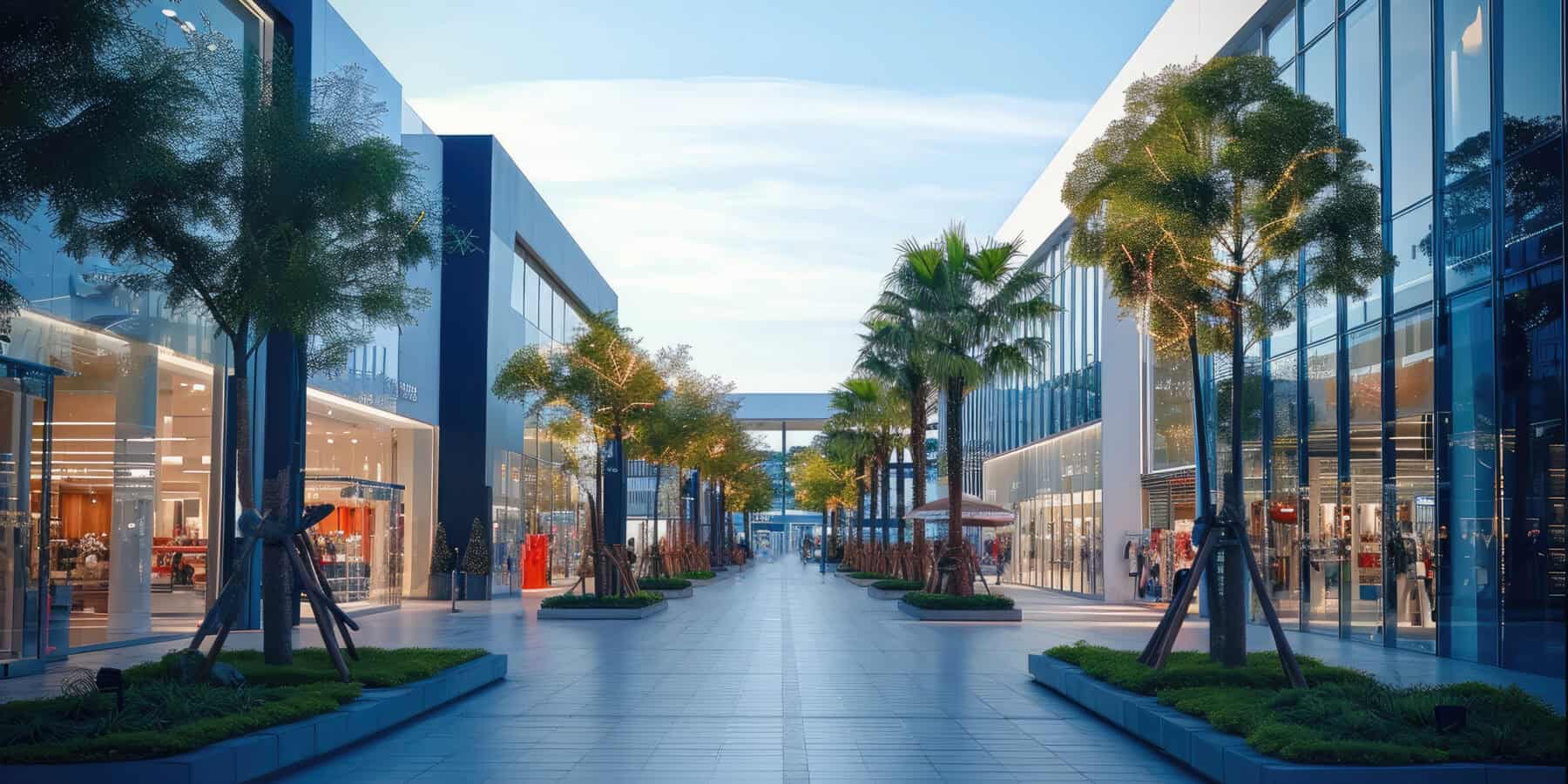
Seventy years ago yesterday, a new shopping center debuted in the northern Chicago suburb of Skokie, Ill. Anchored by a department store bearing the iconic Marshall Field & Company imprimatur, Old Orchard instantly clicked with shoppers, many from the well-heeled nearby North Shore.
What’s more, the open-air center continued thriving even as climate-controlled enclosed malls began sprouting throughout the Chicagoland region.
Rechristened Westfield Old Orchard in 2002, the center today continues to attract customers eager to brave the teeth-chattering winter chill and summer steam baths of suburban Chicago. It remains one of the largest-grossing retail meccas in the Midwest. Ironically, many enclosed malls born years or even decades after Old Orchard’s launch have gone the way of all flesh, long since meeting their dates with the wrecking ball.
It’s a familiar tale nationally. Regional open-air shopping centers such as Seattle’s Northgate Station, Yonkers, N.Y.’s Cross County Center, Monterey, Calif.’s Del Monte Center and Oak Brook, Illinois’ Oakbrook Center, among others, have outlasted many indoor malls intended to go them one better in the shopping experience.
But why?
Beyond outdoors
“People don’t just want a place to buy. They want a place to be,” says Daniel Burrus, futurist and global technology innovation expert. “The strongest open-air centers combine shopping, dining and human connection in an environment people enjoy. Their advantage goes beyond being outdoors. They keep creating reasons to visit.”
Another compelling factor is malleability, says Patrick Forkin, senior vice president at Matthews Real Estate Investment Services. Simply put, open-air centers can be easier to adapt over time.
“Owners can add or reposition buildings, create outparcels and introduce new uses without having to rework one enormous, enclosed structure,” he reports. “That flexibility allows them to respond as retailers and customer habits change.”
Bob Burk, co-founder and managing partner of UrbanStreet, believes open-air centers avoided the brain-numbing uniformity and monotony of so many malls. “For most enclosed malls, the experience was the same everywhere: The same tenants, the same food court, no windows, a long walk from your car,” he says.
“People today . . . want something that feels local and alive. The pandemic sped that up; people got used to being outdoors and never fully went back.”
Then there’s the issue, as Burk suggests, of being able to park close to the store or restaurant you want to visit without trudging several football field-length distances to your chosen destination.
“The mall was built for the browse, and the browse moved online,” says Mike Danford, owner and CRO at Adverio. “What’s left for a store is the errand, the try-on, the pickup and the return. And those favor a center you can be into and out of pronto. Placer.ai has 36.8% of open-air visits under 30 minutes.”
For the other 63.2%, open-air centers may provide some of the same pleasures associated with early 20th Century Main Street shopping districts. “The best open-air centers . . . feel like a town square,” says Chad McWhinney, CEO and co-founder of Realberry. “You can walk outside, sit in the sun, feel the season, meet a friend for dinner, run into a neighbor along the way and make shopping part of a bigger experience. The ones that have lasted also tend to be owned by people who think in decades. They keep reinvesting in the experience, rather than trying to cut their way to profitability.”
Oppressive operating expenses, from flooring to cleaning to heating-cooling put malls at a disadvantage versus open-air centers, adds Ward Kampf, president of Northwood Retail. “Outdoor centers have proven highly successful even in differing climates, with weatherized patios and common areas with heaters or cooling misters and fans, like Easton in Ohio or Scottsdale Quarter in Arizona,” he says.
Finally, open-air centers are able to harmonize well with other types of increasingly common mixed-use elements, such as apartment properties and senior communities “where residents prefer a more urban [or] downtown feel,” says Mitch Friedel, head of retail development, advisory and leasing at Hilco Global. “Enclosed malls simply can’t offer a desired environment in comparison.”
Landscape allure
Back at Westfield Old Orchard, general manager Maegan Akers has her own thoughts on the issue of open-air center versus enclosed mall. Much of the enduring appeal of her center has to do with landscape design, she says. It’s inspired by the nearby Chicago Botanic Garden, offering mature trees, seasonal floral displays, shrubs and native vegetation maintained throughout the year, as well as a koi pond focal point and gathering area. “For us, landscaping is not just flowers, but a core element of what we focus upon,” she says. “People can come here not just to shop but enjoy landscaping and fresh open air.”
That allure was in the forefront of shoppers’ thoughts in 1988, when enclosure was proposed for Old Orchard, says Stephanie Guthrie, museum coordinator with the Skokie Heritage Museum. “There was near unanimous opposition from the public about Old Orchard being enclosed,” she says, citing newspaper coverage of the day.
“You’d think being a Midwest center you’d be losing some of your customer base in the winter by being outdoors. But people who complained talked about everything that’d be lost: The seasonal flowers, the sunshine in the summer, the wintertime events. Some called it a monstrosity; one person said it’d be the extinction of Old Orchard. These comments were very prescient, given the fate of enclosed malls we’ve seen.”
On this milestone anniversary, Akers reports one of the joys of her job is hearing from shoppers about their Old Orchard memories of years and decades past. Says she: “I hope we can continue making memories for years to come.”
This article was originally published in Forbes on October 26, 2026.